
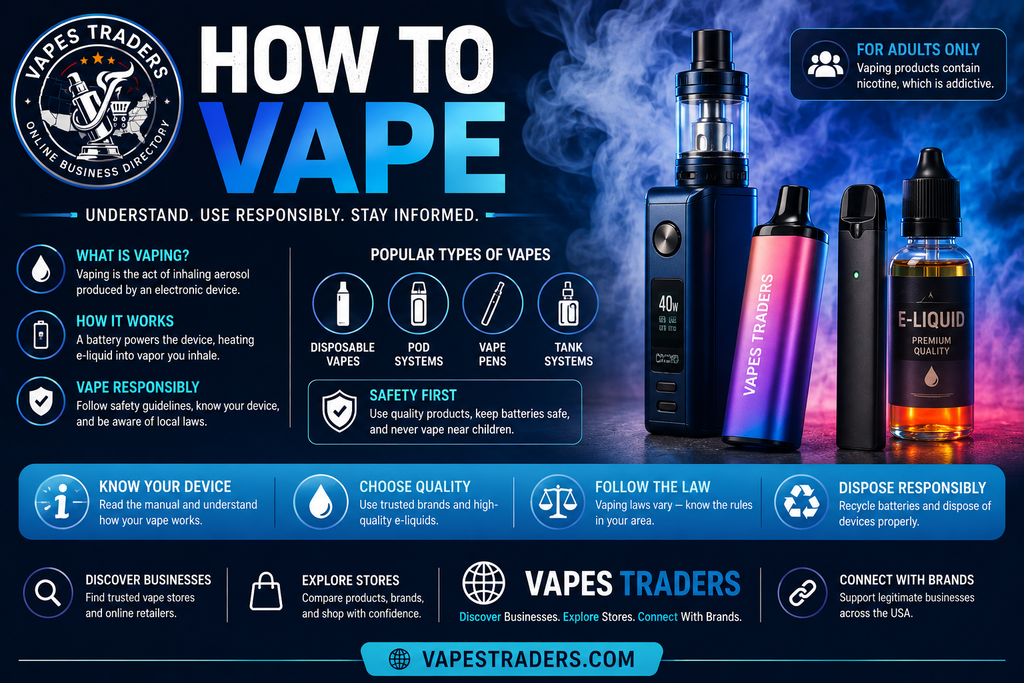
Vaping involves using a battery-powered device that heats e-liquid to create an aerosol for inhalation. Most devices operate through a draw-activated sensor or a button that controls the heating element.
People searching for how to vape should understand how these devices operate, how their components differ, and what safety precautions apply. Many vapes contain nicotine, which is addictive, and the aerosol may contain harmful substances. Adults who do not already use tobacco products should not begin vaping.
How to Vape: Understanding the Basic Process
A vape typically contains a battery, heating element, e-liquid reservoir, and mouthpiece. When the device activates, the heating element warms the liquid and produces an aerosol. The basic operating process depends on the device design.
Step 1: Identify the Vape Device
First, determine whether the device is disposable, rechargeable, or part of a refillable pod or tank system.
Disposable vapes usually contain a sealed e-liquid reservoir. Pod systems use cartridges, while tank-based devices hold liquid in a separate reservoir.
Each design has different operating and maintenance requirements.
Step 2: Check the Device Before Use
Read the manufacturer’s instructions to identify its activation method, battery requirements, and safety features.
Check for physical damage, liquid leakage, or unusual battery swelling. A damaged device should not be operated or charged.
Some models require protective packaging or seals to be removed before operation. Follow the instructions for the specific device rather than forcing any parts open.
Step 3: Understand How the Device Activates
Most vaping devices use one of two activation methods:
Draw-activated devices: A sensor activates the heating element when airflow passes through the mouthpiece.
Button-activated devices: A button controls the heating element. Some models also include power settings and locking features.
The correct activation method depends on the manufacturer’s design.
Step 4: Understand How Aerosol Is Inhaled
Vaping devices produce an aerosol that users inhale through the mouthpiece. Two terms commonly appear in vaping product information:
- Mouth-to-Lung (MTL): Aerosol is drawn into the mouth before being inhaled into the lungs.
- Direct-to-Lung (DTL): Aerosol is inhaled more directly into the lungs.
These terms describe inhalation patterns, not safety ratings. Neither method eliminates exposure to nicotine or other potentially harmful substances.
Step 5: Follow the Device’s Operating Limits
Rechargeable devices must be charged according to their manufacturer’s instructions. Refillable systems also have specific requirements for compatible liquids, pods, coils, and other parts.
Stop using a device if it overheats, leaks, malfunctions, or develops an unusual smell. Do not continue operating it to determine whether the problem will resolve.
How to Use Different Types of Vape Devices
Not every vaping device operates in the same way. The main differences involve liquid storage, activation, charging, and replaceable components.
| Device Type | How It Works | Main Difference |
| Disposable vape | Uses a built-in liquid reservoir and battery | Generally not refillable |
| Rechargeable disposable | Uses a sealed liquid reservoir and rechargeable battery | Battery can be recharged where designed |
| Pod system | Uses a removable or integrated pod | Some pods are replaceable or refillable |
| Vape pen | Battery powers a heating element | Design may use pods, cartridges, or tanks |
| Tank-based system | Uses a refillable liquid tank | May require replaceable coils and other maintenance |
Disposable Vape Devices
Disposable devices contain a limited supply of e-liquid and a built-in battery. Many activate automatically through airflow, although operation varies by model.
Some disposable vapes have USB charging ports. A charging port does not mean the device is designed to be refilled or dismantled.
Pod Vape Systems
Pod systems contain a battery unit and a cartridge that holds e-liquid. Depending on the design, cartridges may be prefilled, replaceable, or refillable.
Only compatible pods and liquids should be used. Incorrect components can cause leakage or device malfunction.
Rechargeable Vape Pens and Tank Systems
Rechargeable vape pens may use buttons, automatic activation, or adjustable controls.
Tank systems can include removable coils and refillable reservoirs. Their maintenance requirements are usually more involved than those of sealed disposable devices.
What Is Inside Vape Juice?
E-liquid, also called vape juice, is the liquid heated by an electronic cigarette.
Common ingredients include:
- Propylene Glycol (PG): A liquid used as a carrier for ingredients and flavorings.
- Vegetable Glycerin (VG): A thicker liquid that contributes to aerosol formation.
- Nicotine: An addictive substance found in many e-liquids.
- Flavorings: Ingredients used to create different flavors.
Some products contain additional ingredients, and formulations vary between manufacturers.
Ingredients that are suitable for eating are not necessarily safe to inhale. The respiratory effects of aerosol exposure depend on the substances present and the way the device operates.
Understanding Vape Nicotine Strength
Nicotine strength indicates how much nicotine an e-liquid contains.
Manufacturers commonly display strength as a percentage or in milligrams per milliliter (mg/mL).
| Nicotine Label | Equivalent Concentration |
| 0% | 0 mg/mL |
| 2% | Approximately 20 mg/mL |
| 3% | Approximately 30 mg/mL |
| 5% | Approximately 50 mg/mL |
These approximate equivalents assume the percentage is expressed as weight per volume. Other labeling methods may differ.
A product’s nicotine concentration does not tell you exactly how much nicotine a person will absorb. Delivery varies with the device, liquid formulation, and usage pattern.
Nicotine can cause dependence, and higher concentrations may increase exposure.
Common Vape Device Problems
Electronic vaping devices can develop problems involving batteries, sensors, heating elements, or e-liquid reservoirs.
Vape Not Producing Aerosol
A device may stop producing aerosol because its battery is depleted, its e-liquid is exhausted, or an internal component has failed.
Check the manufacturer’s troubleshooting guidance. Do not dismantle a sealed device or attempt to bypass its safety features.
Vape Leaking E-Liquid
Leakage can occur when a reservoir or cartridge is damaged, improperly fitted, or affected by temperature changes.
Avoid contact with leaking liquid. Nicotine-containing e-liquid can be absorbed through the skin, and accidental exposure can be dangerous, especially for children.
Burnt Taste From a Vape
A burnt taste may indicate that a heating component is operating without enough liquid or that a component has become damaged.
Stop using the device. For reusable systems, follow the manufacturer’s maintenance instructions. Sealed disposable devices should not be opened for repairs.
Vape Battery Overheating
Unusual heat, swelling, smoke, or a chemical smell may indicate a battery problem.
Stop using or charging the device immediately. Keep away from a device that appears to be entering battery failure, and contact emergency services if there is smoke or fire.
Important Vape Safety Rules
Battery-powered vaping products require careful handling, even when they appear to operate normally.
- Do not use devices with damaged or swollen batteries.
- Avoid charging devices with incompatible equipment.
- Never attempt to recharge a non-rechargeable battery.
- Do not leave devices exposed to excessive heat or direct sunlight.
- Keep nicotine liquids and vaping devices away from children and pets.
- Follow local rules for disposing of devices containing lithium batteries.
E-cigarette batteries and electronic components should not be placed in ordinary household recycling bins. Check local battery or electronic-waste collection requirements.
Is Vaping Safer Than Smoking?
Cigarette smoke contains numerous toxic chemicals created when tobacco burns. E-cigarettes do not burn tobacco, and their aerosol generally contains fewer harmful chemicals than cigarette smoke.
However, fewer harmful chemicals does not mean vaping is safe.
Vape aerosol can contain nicotine, fine particles, heavy metals, and other potentially harmful compounds.
For adults who already smoke cigarettes, completely replacing combustible cigarettes with e-cigarettes may reduce exposure to some toxic substances. Using cigarettes and vapes together does not provide the same benefit and can increase exposure.
The long-term health effects of vaping remain under study. No e-cigarette has been approved by the U.S. FDA as a smoking-cessation medicine.
People who want to quit smoking can consider FDA-approved treatments and professional cessation support.
FAQs
How does a disposable vape work?
A disposable vape uses a battery-powered heating element and a sealed reservoir of e-liquid. Many models activate when airflow is detected through the mouthpiece.
Do all vapes have buttons?
No. Some devices are draw-activated, while others use buttons or a combination of controls.
What is the difference between MTL and DTL vaping?
MTL refers to drawing aerosol into the mouth before inhaling it into the lungs. DTL refers to inhaling aerosol more directly into the lungs. Both expose users to substances present in the aerosol.
Can a vape work without nicotine?
Yes. Some e-liquids are labeled nicotine-free. However, nicotine-free aerosol can still contain potentially harmful substances.
Why does a vape stop working?
Possible reasons include battery depletion, an empty liquid reservoir, sensor failure, or a damaged heating element. The cause depends on the device.
Can you refill a disposable vape?
Most disposable vapes are not designed to be refilled. Opening a sealed device can damage its battery or internal components.
Is vaping safe for beginners?
No vaping product is risk-free. Health authorities advise people who do not already use tobacco products not to start vaping. Nicotine-containing products can cause addiction.
Final Thoughts
Understanding how to vape starts with knowing how the device operates, what the e-liquid contains, and how its battery and heating system work. Disposable vapes, pod systems, and rechargeable devices have different operating requirements, but all involve potential health and safety risks.
Follow the manufacturer’s instructions, avoid damaged devices, and check product information carefully. Vaping is not harmless, and people who do not currently use tobacco should not begin.