
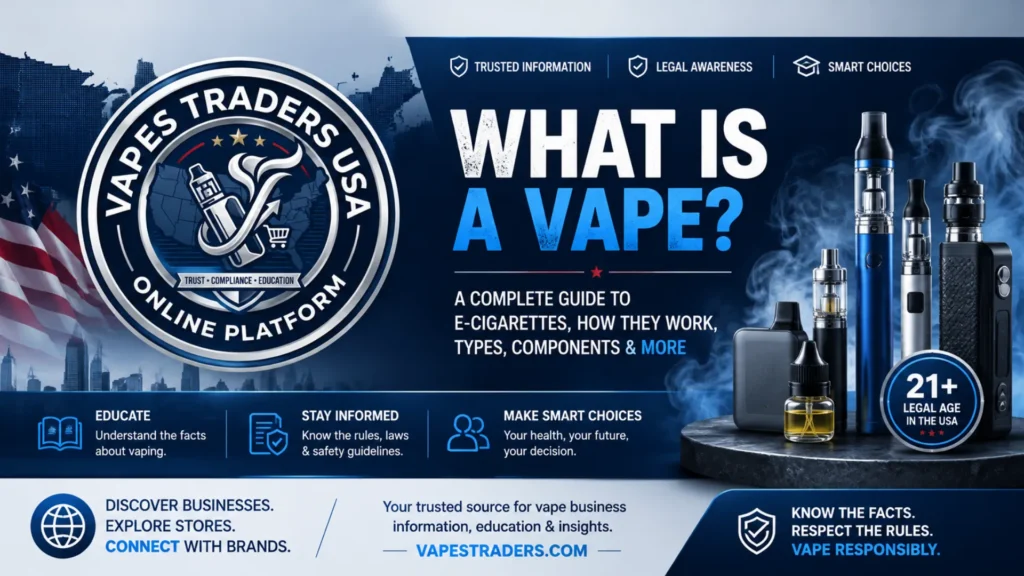
Vapes have become a widely discussed topic in conversations about modern tobacco products, electronic devices, and public health. You may have seen disposable vape devices, vape pens, or small pod systems and wondered what they actually are.
So, what is a vape?
A vape, also known as an electronic cigarette or e-cigarette, is a battery-powered device that heats a liquid to produce an aerosol that a person inhales. The liquid commonly contains nicotine, flavorings, and other ingredients, although its exact composition varies by product.Vapes come in different shapes, sizes, and designs. Some look like small pens, while others resemble USB drives, compact electronic gadgets, or traditional cigarettes.
In this guide, Vapes Traders explains what a vape is, how it works, its main components, different types of devices, and important information about vaping and health.
What is a Vape?
A vape is an electronic device designed to heat a liquid, commonly called e-liquid, vape juice, or e-juice, and turn it into an inhalable aerosol.
Unlike traditional cigarettes, which burn tobacco to produce smoke, most vaping devices use a battery-powered heating element.
The aerosol produced by a vape is commonly called vapor in everyday conversation. However, it is more accurately described as an aerosol because it contains tiny airborne particles and droplets rather than simply water vapor.
Most e-cigarettes contain nicotine, an addictive substance. Some products may be marketed as nicotine-free, but consumers should not assume that every product’s contents match its advertising.
Vapes are also known by several other names:
- Electronic cigarettes
- E-cigarettes
- Vape pens
- E-hookahs
- Pod systems
- Electronic nicotine delivery systems (ENDS)
Although these terms are sometimes used interchangeably, they can describe different device designs.
How Does a Vape Work?
Most vaping devices operate using a similar basic process: a battery supplies power to a heating element, which heats the liquid and produces an aerosol.
Here is a simple explanation of the main stages:
Step 1: Battery supplies power
The device contains a rechargeable or built-in battery that provides electrical power.
Step 2: The heating element warms the liquid
When the device is activated, its heating element warms the e-liquid held in a pod, cartridge, or tank.
Step 3: Aerosol is produced
The heated liquid forms an aerosol containing tiny particles and droplets.
Step 4: Aerosol is inhaled
The aerosol travels through the mouthpiece and is inhaled by the person using the device. Different devices use different heating systems, but the general operating principle is similar.
What Are the Main Parts of a Vape?
Although vape designs differ, many electronic cigarettes contain several common components.
Battery
The battery supplies the electrical energy needed to operate the device. Some products have built-in rechargeable batteries, while others are designed for limited use.
Heating Element
The heating element warms the e-liquid to create an aerosol. It is sometimes called a coil or atomizer.
Pod, Cartridge, or Tank
This section holds the e-liquid. Depending on the device, it may be prefilled, replaceable, or refillable.
Mouthpiece
The mouthpiece is the part through which the aerosol passes before it is inhaled.
Electronic Controls
Some devices include buttons, airflow controls, indicator lights, or digital displays. Simpler models may activate automatically when a person inhales.
Not every vape contains all these features. The design depends on the product type and manufacturer.
What Are the Different Types of Vapes?
Vaping devices are available in several categories. Understanding their basic differences can help readers recognize the terminology used in product information and industry discussions.
A. Disposable Vapes
Disposable vapes are generally sold with e-liquid already inside the device. They are designed for limited use and are not intended to be refilled. Some models include rechargeable batteries, while others are not rechargeable.
Refillable Vape Devices
Refillable devices have a tank or chamber designed to hold e-liquid. Their construction and features vary by model.
C. Pod Systems
Pod systems use small liquid-holding pods or cartridges. Depending on the product, these may be prefilled or refillable.
D. Vape Pens
Vape pens are usually slim, cylindrical electronic devices. Their appearance can resemble a writing pen, which is where the name comes from.
E. Box Mods and Tank Systems
These are generally larger devices with a separate tank and more electronic controls. Some include adjustable settings and digital displays.
Important: Device categories describe product designs, not levels of safety. No vaping device should be considered risk-free.
What Is Inside Vape Juice?
Vape liquid is commonly called e-liquid, vape juice, or e-juice. Its ingredients vary between manufacturers and products.
Common ingredients may include:
- Nicotine: An addictive substance found in many e-cigarette products.
- Propylene glycol (PG): A liquid commonly used as a carrier for ingredients.
- Vegetable glycerin (VG): A liquid used in e-liquid formulations.
- Flavorings: Ingredients used to create different flavor profiles.
- Other additives: Certain products may contain additional substances depending on their formulation.
Not every product contains the same ingredients or nicotine concentration. It is also important to understand that ingredients considered suitable for eating are not automatically safe to inhale. The lungs process substances differently from the digestive system.
Is Vape Vapor Just Water Vapor?
No. This is one of the most common misunderstandings about electronic cigarettes. Although people often use the word vapor, the substance released by a vape is an aerosol.
An aerosol consists of small particles or droplets suspended in the air. Depending on the product, this aerosol may contain:
- Nicotine
- Ultrafine particles
- Certain chemicals
- Volatile organic compounds
- Heavy metals, including substances such as nickel, tin, and lead
- Flavoring-related compounds
The exact substances can vary between devices and e-liquids.
The Centers for Disease Control and Prevention (CDC) emphasizes that e-cigarette aerosol is not harmless water vapor.
Is Vaping Safe?
Vaping should not be described as completely safe.
Many e-cigarettes contain nicotine, which is highly addictive. Nicotine exposure is particularly concerning for young people because brain development continues into young adulthood.
Other potential concerns include exposure to harmful substances, respiratory effects, and device-related safety problems.
The US Centers for Disease Control and Prevention advises that:
- Youth and young adults should not use e-cigarettes.
- Pregnant women should not use e-cigarettes.
- Adults who have never smoked or used tobacco products should not start vaping.
- E-cigarettes are not risk-free tobacco products.
The FDA notes that adults who smoke may potentially reduce exposure to some harmful chemicals if they switch completely from combustible cigarettes to e-cigarettes. However, this does not make vaping harmless, and the FDA has not approved e-cigarettes as smoking-cessation medicines.
People considering quitting smoking should speak with a qualified healthcare professional about evidence-based options.
What Is the Difference Between Vaping and Smoking?
Vaping and traditional smoking are different processes, although both can involve exposure to nicotine.
| Feature | Vaping | Traditional smoking |
|---|---|---|
| Device | Electronic device | Cigarette or other tobacco product |
| Main process | Heats liquid | Burns tobacco |
| Byproduct | Aerosol | Smoke |
| Battery | Usually required | Not required for a conventional cigarette |
| Nicotine | Commonly present | Commonly present |
| Health risks | Not risk-free | Established serious health risks |
Neither should be considered harmless. Vaping aerosol can contain potentially harmful substances, while cigarette smoke contains numerous toxic chemicals produced by burning tobacco.
What Is the Legal Age to Buy a Vape in the USA?
In the United States, federal law sets the minimum purchase age for covered tobacco products, including e-cigarettes, at 21 years old.
This requirement is commonly known as Tobacco 21.
Retailers must follow applicable age-verification requirements, and additional state and local restrictions may apply.
For more information, read our related Vapes Traders article:
How Old Do You Have to Be to Buy a Vape? A Complete Guide to Vape Age Laws in the USA
How Should Readers Understand Vape Product Information?
When researching e-cigarettes or reading about vaping businesses, it is useful to understand the terminology and information presented by manufacturers and retailers.
Consider these points:
- Check the product’s ingredient information.
- Understand whether a device is disposable, refillable, or pod-based.
- Look for clear manufacturer and business information.
- Review applicable age restrictions and local regulations.
- Do not assume that a product is safe because it is advertised as nicotine-free.
- Treat health and safety claims cautiously and consult reliable sources.
For general educational information, official sources such as the FDA and CDC are more reliable than unsupported product claims.
Frequently Asked Questions
1. What is a vape in simple words?
A vape is a battery-powered electronic device that heats a liquid to produce an aerosol that a person inhales. Many vape liquids contain nicotine, flavorings, and other ingredients.
2. Is a vape the same as an electronic cigarette?
The terms are often used interchangeably. Vape is a common name for electronic cigarettes and other electronic nicotine delivery devices.
3. What is vape juice?
Vape juice, also called e-liquid or e-juice, is the liquid used in many electronic cigarettes. It may contain nicotine, flavorings, propylene glycol, vegetable glycerin, and other ingredients.
4. Do all vapes contain nicotine?
No. Some products are marketed as nicotine-free, while many others contain nicotine. Product contents should be checked carefully because labels and actual contents may not always match.
5. What are disposable vapes?
Disposable vapes are electronic devices generally sold with prefilled liquid and designed for limited use. They are not intended to be refilled.
6. Does a vape produce smoke?
A typical e-cigarette does not burn tobacco like a traditional cigarette. It heats liquid and produces an aerosol, which is commonly but inaccurately called vapor.
7. Can vaping cause nicotine addiction?
Yes. Many vaping products contain nicotine, which is highly addictive. People who do not currently use tobacco or nicotine products should not start vaping.
8. What is the legal age to buy a vape in the USA?
The federal minimum age to purchase covered tobacco products, including e-cigarettes, is 21 years old. State and local rules may impose additional restrictions.
Final Thoughts: Understanding What a Vape Is
A vape is an electronic device that heats a liquid to produce an aerosol. Although devices vary in appearance and design, most contain a battery, heating element, liquid container, and mouthpiece.
Understanding what vapes are, how they work, and what their liquids may contain helps readers make sense of the terminology used throughout the vaping industry.
It is equally important to understand that vaping is not risk-free. Nicotine addiction, exposure to potentially harmful substances, and other health concerns should not be overlooked.
At Vapes Traders, our goal is to make information about vape-related businesses, retailers, and industry topics easier to discover. We operate as an online business directory and discovery platform, not as a vape retailer or a source of medical advice.
Stay informed, understand the facts, and consult trusted sources when researching vaping products.
Disclaimer: This article is provided for general educational purposes only. It is not medical advice and does not encourage anyone to begin using vaping or nicotine products. Health information and product regulations may change; consult official authorities and qualified healthcare professionals for guidance.